
Masters Group
Professional Structural Steel
Beam (RSJ) Design &
Installation in Brighton
All our work is comprehensively insured and designed through a team of professional structural engineers who conduct thorough assessments to ensure the feasibility of load-bearing wall removals — providing tailored solutions that create harmonious spaces, elevate property value, and maintain structural integrity.
30+ years experience · Structural engineer designed · Fully insured · LABC approved
30+ Years
Steel beam experience
Structural Engineers
Every beam designed
LABC Approved
Building control partnership
Fully Insured
Comprehensive cover
RSJ and Steel Beam Installations: Essential Structural Elements
At Masters Group, we understand that RSJ and steel beam installations are essential to the structural integrity of construction projects. These load-bearing elements are crafted from high-quality steel, offering exceptional durability and the ability to support heavy loads over long spans, making them vital for both residential and commercial applications.
Steel beams are used when load-bearing walls are removed to create open-plan spaces, when new openings are formed in existing walls, when extensions connect to existing buildings, and when upper floors or roofs need additional support. Every application requires precise engineering calculations to determine the correct beam size and bearing details.
We deal with extensions, new build steel installations, and internal alterations. Whether you need a single RSJ for a kitchen-diner conversion or a complete steel frame for a new build, our structural engineering partners design every installation to exact requirements.
The combination of professional structural design, experienced installation teams, and building control certification ensures every steel beam we install is safe, compliant, and built to last the lifetime of the building.
The Art of Load-Bearing Wall Removal
While load-bearing walls provide necessary support, they can restrict design possibilities. Our expertise in load-bearing wall removal allows us to carefully extract these walls while maintaining the overall structural integrity of the building. This process creates open, airy spaces that enhance light and design flexibility.
Removing a load-bearing wall without proper structural calculations is one of the most dangerous DIY or cowboy-builder mistakes. The wall exists because it carries the weight of the structure above — removing it without adequate temporary support and a correctly sized replacement beam can cause ceiling collapse, floor sagging, and catastrophic structural failure.
Even when a steel beam is installed, incorrect sizing causes long-term problems. An undersized beam will deflect under load, causing cracking in plasterwork above, doors that stick, and visible sagging. Over time, excessive deflection can damage the structure permanently.
Bearing point failure is equally dangerous. The steel beam transfers concentrated loads to the points where it sits on the wall. If these bearing points are not properly designed — with adequate padstones and sufficient wall beneath — the load can crush the masonry, causing the beam to drop and the structure to fail.
Our Process
How We Deliver Every Project
Structural Survey
Assessment of the wall to be removed, identification of loads carried, and measurement of span and bearing conditions.
Structural Design
Structural engineer produces beam calculations, specifying beam size, bearing plate details, and temporary works requirements.
Building Control Application
Submission of structural calculations and method statement to LABC for approval before work begins.
Temporary Support
Installation of Acrow props and strongboy supports to carry the load above while the wall is removed.
Beam Installation
Controlled wall removal, steel beam placement, and securing of beam at bearing points with padstones or bearing plates.
Making Good & Sign-Off
Plastering around beam, making good all surfaces, and building control final inspection with certification.
Why This Matters for Your Project
Exceptional Strength
Our steel beam suppliers provide unmatched strength-to-weight ratios, enabling spacious, open-concept designs without sacrificing safety.
Design Freedom
The versatility of steel allows for ambitious architectural layouts, including larger openings and extensive natural light.
Durability
Resistant to environmental factors and pests, our steel solutions ensure long-lasting performance with minimal maintenance.
Quick Installation
Our efficient installation processes reduce construction time and costs significantly — most RSJ installations complete in 1–2 days.
Sustainability
We prioritise eco-friendly practices, utilising recyclable steel that supports sustainable building standards.
Building Control Certified
Every installation is designed by structural engineers, inspected by LABC, and certified — protecting your investment and insurance.
Project Gallery
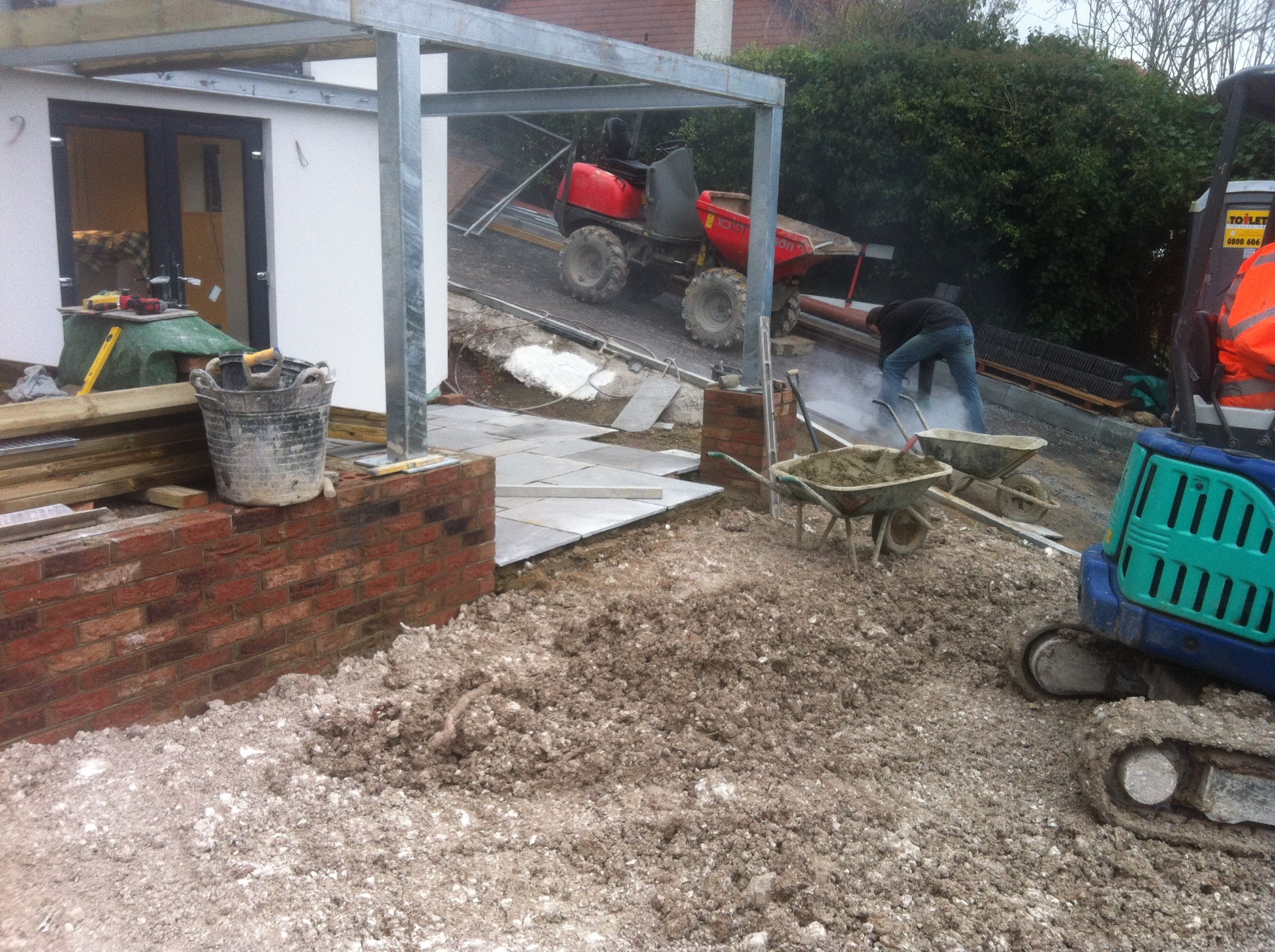
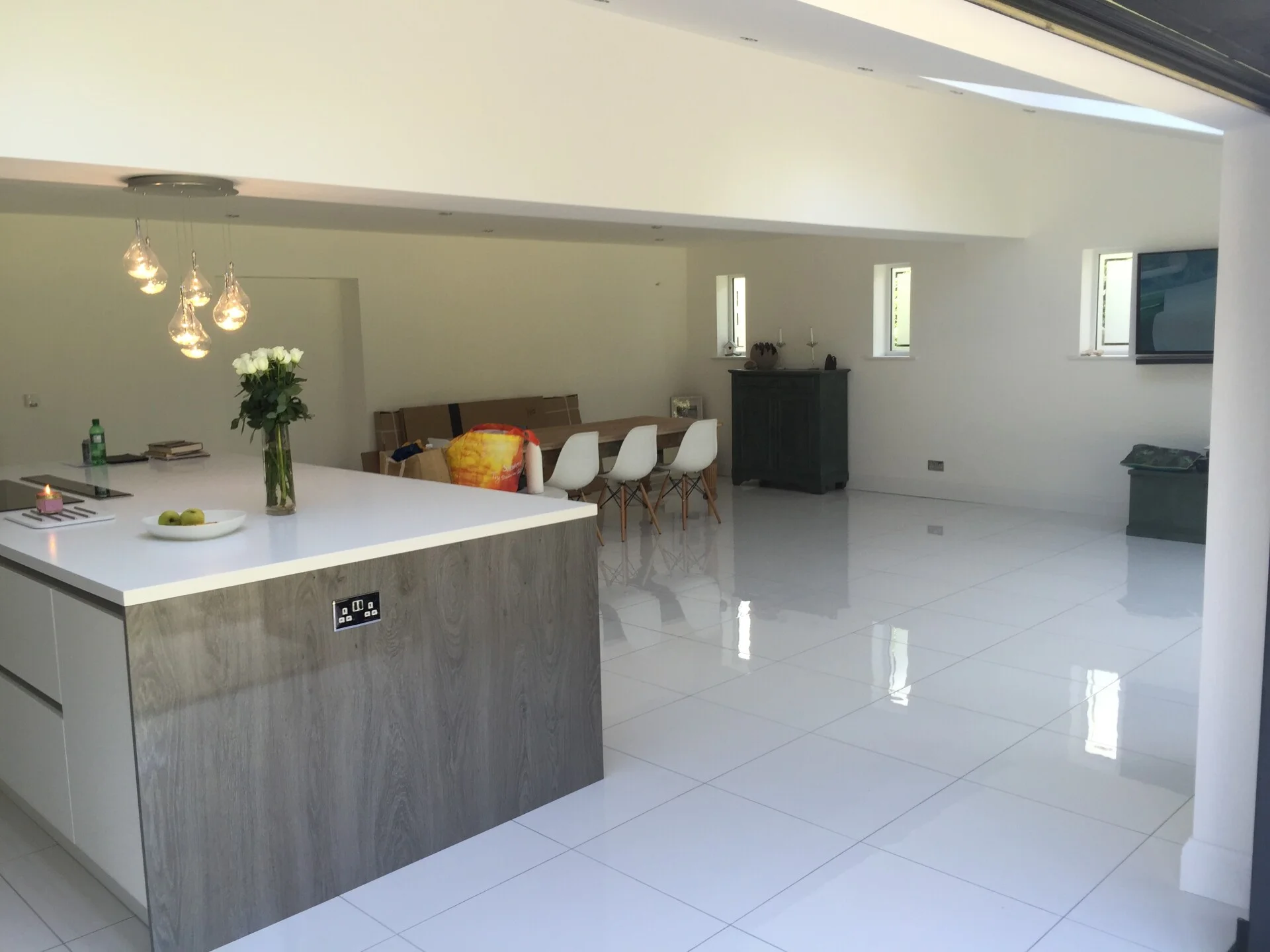
Recent RSJ Steel Beam Installation Service Projects
Steel Beam Installations: Specifications, Methods & Technical Detail
Universal Beams (UBs) — commonly called RSJs (Rolled Steel Joists) — are the standard structural steel sections used in domestic construction. They are manufactured in a range of sizes from 127x76 UB (the smallest common domestic size) to 610x229 UB for large spans. The correct size is determined by structural calculation based on span, loading, and deflection limits.
For a typical kitchen-diner wall removal in a Brighton Victorian terrace (3–4 metre span, single storey above), the beam is usually 152x89 UB to 203x133 UB in S275 grade steel. For two-storey loads or wider spans, heavier sections up to 254x146 UB or 305x165 UB may be required.
Bearing point design is critical. Each end of the beam sits on a concrete padstone (minimum 225x225x100mm for most domestic applications) or a steel bearing plate that distributes the concentrated load into the supporting wall. The wall beneath must be continuous down to foundation level with adequate load-bearing capacity.
Temporary works during wall removal follow a precise sequence: Strongboy props are fitted through the wall at regular intervals to support the masonry above. Acrow props support floor joists if the wall carries floor loads. The wall is then removed in sections, the beam is lifted into position (often requiring multiple operatives), and the beam is secured at its bearing points before any temporary support is removed.
Fire protection may be required where steel beams support upper floors in domestic properties. This is typically achieved through intumescent paint (providing 30 or 60 minutes fire resistance) or by encasing the beam in fire-rated plasterboard. The requirement depends on the beam's location and building regulation requirements.
Steel beam costs in Brighton include the engineering calculations (£300–£600), the steel beam itself (£200–£800 depending on size), building control fees (£200–£400), and installation labour (£1,500–£3,500). A complete RSJ installation including all plastering and making good typically costs £3,000–£6,000.
Frequently Asked Questions
Need Expert RSJ or Steel Beam Installation?
Discover how Masters Group can transform your project with expert RSJ and steel beam installations. Get a free, no-obligation estimate today.